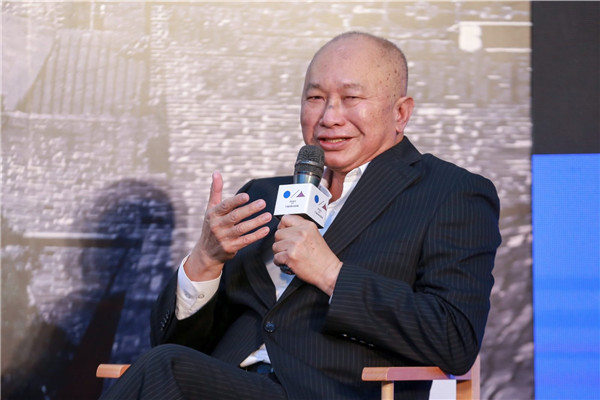
John Woo
吴宇森
- 分类: 艺术瑰宝
- ID: 1866814631183216641
Home CategoryArtsJohn WooPlay5 minsJohn Woo, born on May 1, 1946, in Guangzhou, China, is a renowned filmmaker known for his influential work in action cinema. Raised in Hong Kong after fleeing the Chinese Civil War, Woo was inspired by directors Akira Kurosawa, Jean-Pierre Melville, and Sam Peckinpah. Starting in the 1960s, he progressed from behind-the-scenes roles to acclaimed director.ShareCatalogue1. Early Life and Career Beginnings2. Breakthrough with Hong Kong Cinema3. Transition to Hollywood4. Recent Works and Return to Asian Cinema5. Awards and Influence
Early Life and Career Beginnings
John Woo was born on May 1, 1946, in Guangzhou, China. His family moved to Hong Kong when he was a child due to the Chinese civil war. Woo's fascination with cinema began at a young age, and he was particularly influenced by the works of Akira Kurosawa, Jean-Pierre Melville, and Sam Peckinpah. He began his career in the film industry in the 1960s, working his way up from various behind-the-scenes roles to eventually become a director.
Breakthrough with Hong Kong Cinema
John Woo became a pioneer of Hong Kong action cinema in the 1980s, known for his unique style that combined intense action sequences with emotional storytelling. His breakthrough came with the film A Better Tomorrow (1986), starring Chow Yun-fat, which became a massive hit in Asia and set the stage for his future successes. Woo followed this with other classic action films like The Killer (1989) and Hard Boiled (1992), which further solidified his reputation as a master of the action genre.
Transition to Hollywood
The success of his Hong Kong films caught the attention of Hollywood, and Woo made his American directorial debut with the film Hard Target (1993). He gained widespread recognition in Hollywood with the release of Face/Off (1997), starring John Travolta and Nicolas Cage, and Mission: Impossible 2 (2000), starring Tom Cruise. These films showcased Woo's signature style of choreographed action sequences and intricate plots, making him one of the most recognized Chinese filmmakers in the West.
Recent Works and Return to Asian Cinema
Despite his Hollywood success, Woo experienced setbacks with some of his later films, such as "The Crossing" series, which did not perform well at the box office. However, he remained a respected figure in the industry and continued to influence a new generation of filmmakers. Woo returned to Asian cinema with projects like "Manhunt" (2017), a remake of a classic Japanese film that paid homage to the late Japanese actor Ken Takakura, whom Woo admired greatly.
Awards and Influence
John Woo, a seminal figure in the action film industry, has significantly influenced global cinema with his distinct style and storytelling techniques. His work is characterized by its operatic action sequences, the use of slow-motion, and the focus on themes of brotherhood, honor, and redemption. Woo's influence extends beyond action films, as his stylistic innovations have been adopted by filmmakers across various genres and regions.
Woo's films have received numerous accolades, solidifying his status as a master of the genre. Notably, his Hong Kong action film A Better Tomorrow (1986) not only set box office records but also redefined the action film genre in Asia and inspired a generation of filmmakers. The film's impact was such that it was celebrated at the Pingyao International Film Festival, more than three decades after its release, demonstrating its enduring appeal and influence.
In Hollywood, Woo continued to break new ground with films like Face/Off (1997) and Mission: Impossible 2 (2000), which were both commercial successes. His work paved the way for other Asian directors to enter the Hollywood mainstream, and his signature style has been emulated in numerous Western films. Woo's career achievements were recognized with the prestigious Golden Lion Award for Lifetime Achievement at the Venice International Film Festival in 2010.
Moreover, Woo's films have been a source of inspiration for other creatives, including renowned directors like Quentin Tarantino and the Wachowskis, who have cited his work as influential in their own filmmaking processes. His contributions to cinema extend beyond the screen, as he has been involved in initiatives that support emerging filmmakers, ensuring the continuation of innovative storytelling in the film industry.
Despite the challenges and occasional setbacks, such as the commercial performance of The Crossing films, Woo's dedication to storytelling and his artistic vision remain unwavering. His recent projects continue to explore new themes and ideas, reflecting his commitment to pushing the boundaries of cinema. Through his films, John Woo has left an indelible mark on the industry, influencing not only his contemporaries but also future generations of filmmakers. Article reference1. Film editor David Wu shares tips with young talents. chinadaily.com.cn. 20182. Film star, Huang, funds fresh film talent. chinadaily.com.cn. 20183. John Woo's tribute to Ken Takakura. chinadaily.com.cn. 2017Photo Gallery(4 pictures)CategoriesArtsTagArtistsFilm and TVRelatedLuo GuanzhongRed Cliff (Film)A Better Tomorrow (Film)Manhunt (Film)Catalogue1. Early Life and Career Beginnings2. Breakthrough with Hong Kong Cinema3. Transition to Hollywood4. Recent Works and Return to Asian Cinema5. Awards and Influence- - - []








